
Our Blast Control Device physically controls the detonator inside the blast hole — turning variable initiation into controlled initiation, and delivering safer, faster, more profitable blasting with zero change to your drilling, explosives or blast design.
Mines design blasts with precision engineering — drill patterns to the millimetre, optimised explosive columns, choreographed timing. Yet the point of detonation is still determined by how a detonator happens to sit in the hole.
Uncontrolled detonator positioning causes reverse priming, toe contact, misfires and fly rock — direct triggers for injuries and regulatory stoppages that halt production.
When the primer is off-centre, against the toe, or facing the wrong direction, energy is wasted into rock walls instead of breaking the face — driving up cost per metre advanced.
When each hole initiates differently, pull becomes inconsistent, advance varies, support schedules slip, and planning stability degrades across the operation.
“The detonator behaves unpredictably inside the hole — regardless of crew skill, training or diligence. This is a systems problem, not a human performance issue. The solution must be physical, not procedural.”Root cause — Talonite blast engineering analysis
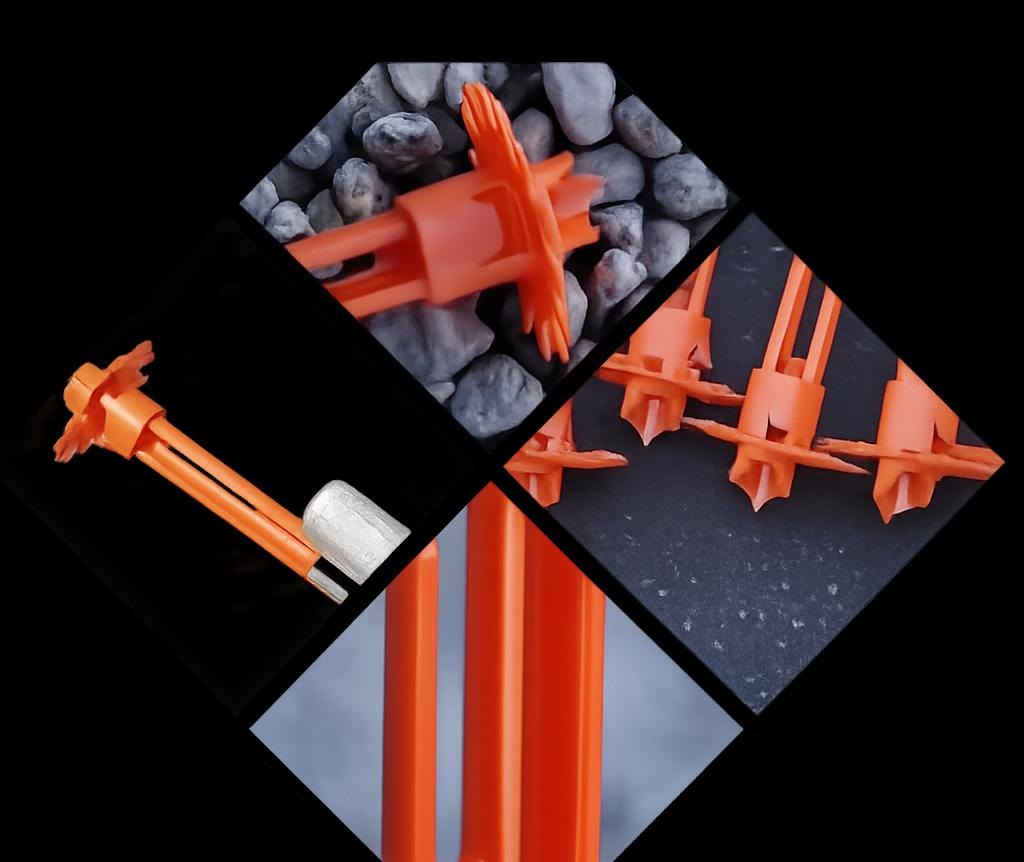
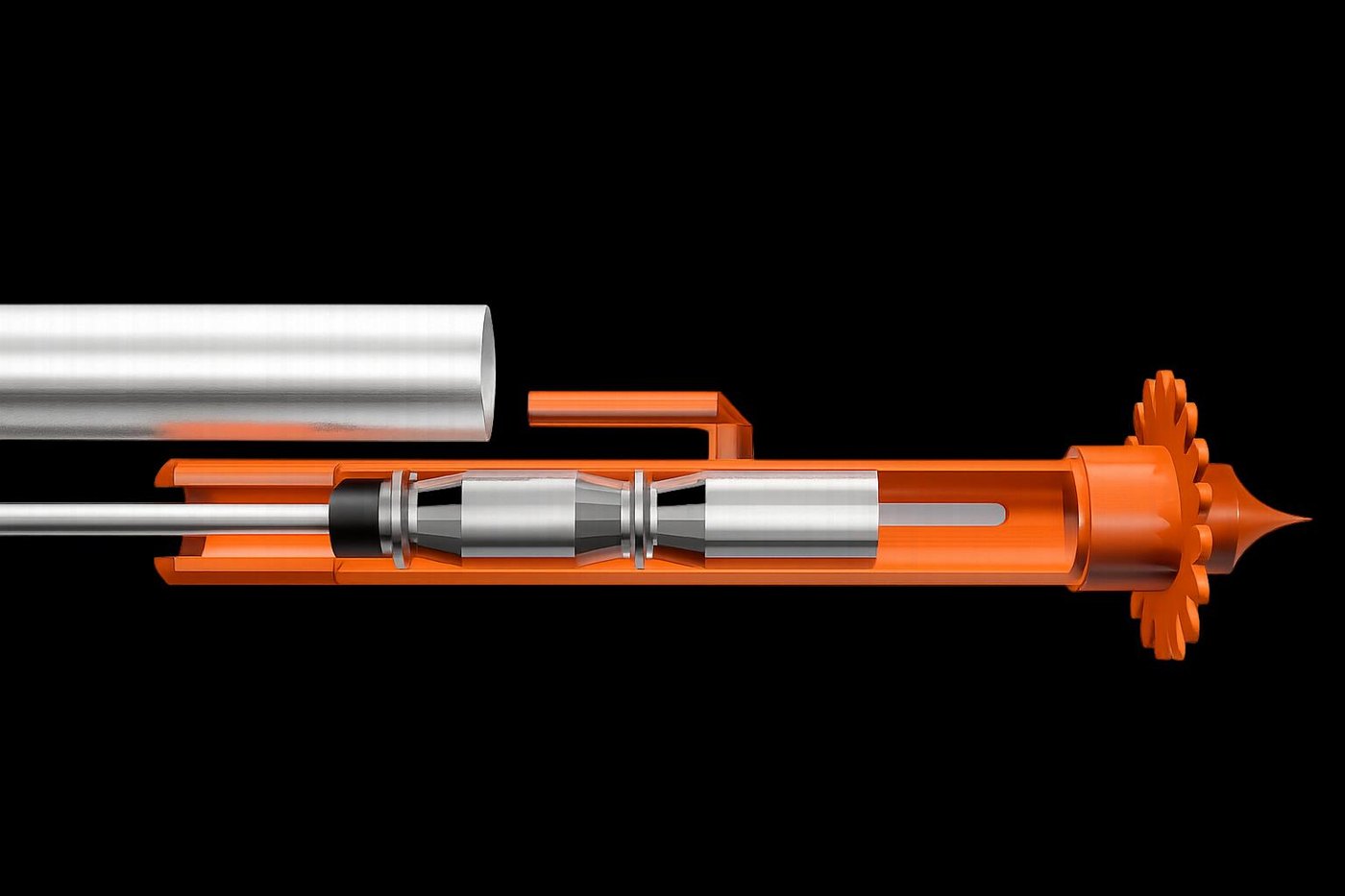
The device is a 4-gram, high-visibility detonator holder used during normal charging. It meets every requirement of a true blast control device through passive mechanical design — not complex technology.
Physical design makes incorrect orientation impossible — the detonator cradle eliminates any possibility of reverse priming.
Rotation is eliminated, ensuring consistent energy direction in every hole, every blast.
The flexible umbrella flange adapts automatically to varying hole diameters, keeping energy release in the centre of the hole.
A controlled standoff distance prevents energy loss into the toe wall.
Inserted with a standard charging rod — no change to explosives, drill design, timing or charging procedure.
Lightweight plastic disintegrates completely during blasting. Bright orange body ensures easy identification.
Simple mechanical design — no complex technology, no procedure change.

The trial is structured to eliminate all financial risk from your operation. You run your blasts, we prove the benefit — and if the numbers don't stack up, you owe nothing.
Blasting continues exactly as normal. Baseline advance and safety metrics are captured rigorously across multiple blasts.
The device is introduced into the charging process only. Drill patterns, explosive loads and crews remain unchanged — zero disruption.
Trial advance and safety data are compared directly against the benchmark. Proven benefit → commercial rollout. If not — no cost, no invoice, no obligation.
In a controlled mine trial, nothing changed except the blast control device. The physics is proven, the value is measurable, and the results are repeatable.
Immediate ROI compounds across the cycle: fewer drill metres, fewer rounds per metre advanced, reduced charging crew requirements, lower support cost per developed metre, and fewer re-entry delays.
Delivered through the Talonite Three Horizons journey — Foundation → Optimise → Improve — with ROI tracked, validated and compounded through our Smart Eye value layer. Every solution, every discipline.
See how we deliver value →The device has been deployed at scale across seven shafts — including Kwezi, K6, Kopaneng, Bambanani, Main and East — with ongoing satisfied use and two operations adopting a strict device-only policy. The improvement mechanism is physical: better energy direction, reduced toe losses, and more effective fracture propagation.
It is a 4-gram, high-visibility detonator holder used during normal charging. It physically controls the detonator inside the blast hole — preventing reverse priming, locking orientation, centring the detonator and separating it from the toe — turning variable initiation into controlled initiation.
In controlled trials, standardised detonator positioning delivered a 40–55% improvement in advance per blast, with better fragmentation and more consistent pull — without changing the drill pattern, explosives or crew workflow.
No. The device is used during normal charging and works with standard detonators and primers. Crews follow the same workflow; the device simply removes the variability that skill and training alone cannot control.
Uncontrolled detonator positioning causes reverse priming, toe contact, misfires and fly rock — common triggers for Section 54 stoppages. By making incorrect orientation physically impossible, the device removes those failure modes at the source.
500 devices, a structured three-phase trial, and a scientifically valid comparison against your own baseline — with no invoice unless improvement is proven.